



Introduction
Remote work is no longer an experiment, it’s infrastructure.
What started as a temporary response has now become a permanent part of how companies operate. From startups to global teams, working from home is deeply embedded into modern work culture.
But there’s a gap between expectation and reality.
On the surface, remote work looks ideal: no commute, flexible hours, and the comfort of your own space. In practice, it introduces a different kind of pressure, one that is less visible but often more demanding.
The challenges are not always obvious. They build slowly, affecting focus, motivation, health, and even long-term career growth.
If you’re working remotely, or planning to, understanding these problems early can make the difference between thriving and burning out.
Table of Contents
- Introduction
- Table of Contents
- Work-Life Boundaries Slowly Disappear
- Distractions Are Small but Constant
- Isolation Affects More Than Just Mood
- Communication Becomes Slower and Less Clear
- Motivation Is No Longer External
- Physical Health Quietly Declines
- Burnout Builds Without Warning
- Career Growth Requires More Effort
- Technical Issues Break Your Flow
- Your Home Stops Feeling Like a Place to Relax
- Remote Work Isn’t Easier, It’s Just Different
- Conclusion
- Frequently Asked Questions
Remote work doesn’t reduce workload, it shifts control from managers to individuals.
1. Work-Life Boundaries Slowly Disappear

When your workspace and living space overlap, your brain loses a clear signal for when work starts and when it ends.
You might open your laptop early just to “check something,” and before you realize it, you’re already working. Evenings become extensions of unfinished tasks, and weekends start feeling like buffer zones for pending work.
This isn’t always forced, it often happens subtly.
Over time, this constant overlap creates a mental state where you’re never fully working, but never fully resting either. That’s where fatigue begins to build.
How to fix it:
The solution isn’t just about time, it’s about boundaries.
Set a fixed working window and respect it as if you were in an office. More importantly, create a shutdown ritual. This could be as simple as closing your laptop, cleaning your desk, or stepping out for a short walk.
You need a signal that tells your brain: work is done.
Most remote workers don’t struggle with work, they struggle with starting
2. Distractions Are Small but Constant

Most people imagine distractions as major interruptions. In reality, they are small, frequent, and easy to ignore, which makes them more dangerous.
A quick scroll on your phone. A notification. A minor household task. These moments feel harmless, but they break your concentration repeatedly.
Each time you lose focus, your brain needs time to recover. This constant switching reduces your ability to do deep, meaningful work.
By the end of the day, you may feel busy, but not productive.
How to fix it:
Instead of trying to eliminate distractions completely, control your environment.
Work in defined time blocks. Keep your phone away or on silent. If possible, create a workspace that is used only for work, even if it’s just a specific corner.
The goal is not perfection. It’s consistency.
“Studies show many remote workers experience burnout due to longer working hours”
3. Isolation Affects More Than Just Mood

One of the most underestimated challenges of remote work is isolation.
In an office, interaction happens naturally, conversations, shared breaks, quick discussions. At home, all of that disappears unless you actively create it.
At first, the silence feels peaceful. Over time, it can start affecting motivation and mental clarity.
You may feel less connected to your team, less engaged in work, and less energized overall.
How to fix it:
Social interaction needs to become intentional.
Schedule regular check-ins that are not strictly task-focused. Talk to people outside of work. Occasionally change your environment, work from a café or a shared space.
Even small interactions can restore a sense of connection.
“Communication and collaboration often decline in remote environments due to lack of non-verbal cues”
4. Communication Becomes Slower and Less Clear
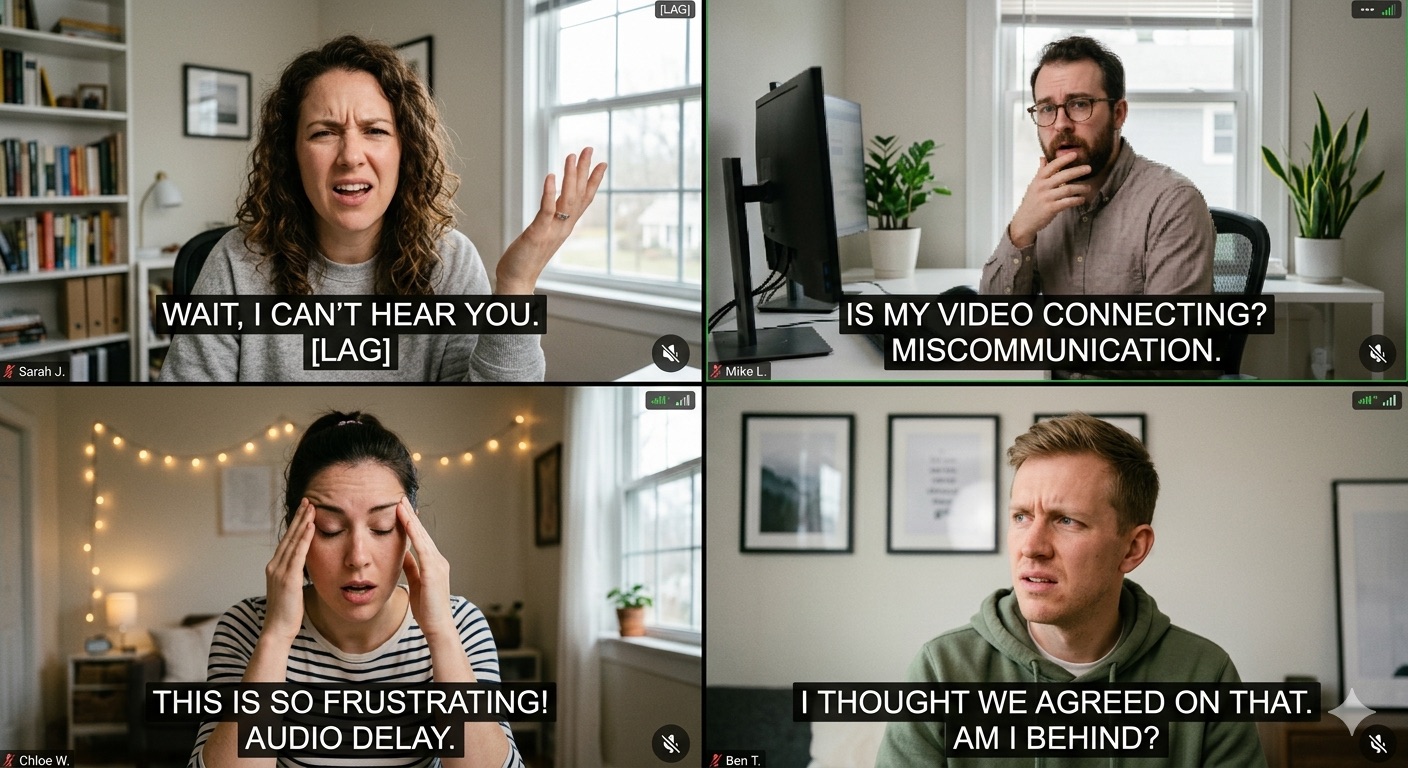
In a physical workspace, communication is immediate. You ask a question, get an answer, and move forward.
Remotely, everything becomes structured, messages, emails, scheduled calls. This creates delays and increases the chance of misunderstanding.
Tone gets lost in text. Context is often missing. Simple issues take longer to resolve.
Over time, this slows down decision-making and creates unnecessary friction.
How to fix it:
Clarity is more important than speed.
Write messages that are complete and structured. Avoid vague communication. When something is important or complex, switch to a call instead of long message threads.
Also, document key decisions. It saves time and prevents confusion later.
What looks like flexibility often turns into invisible pressure.
5. Motivation Is No Longer External
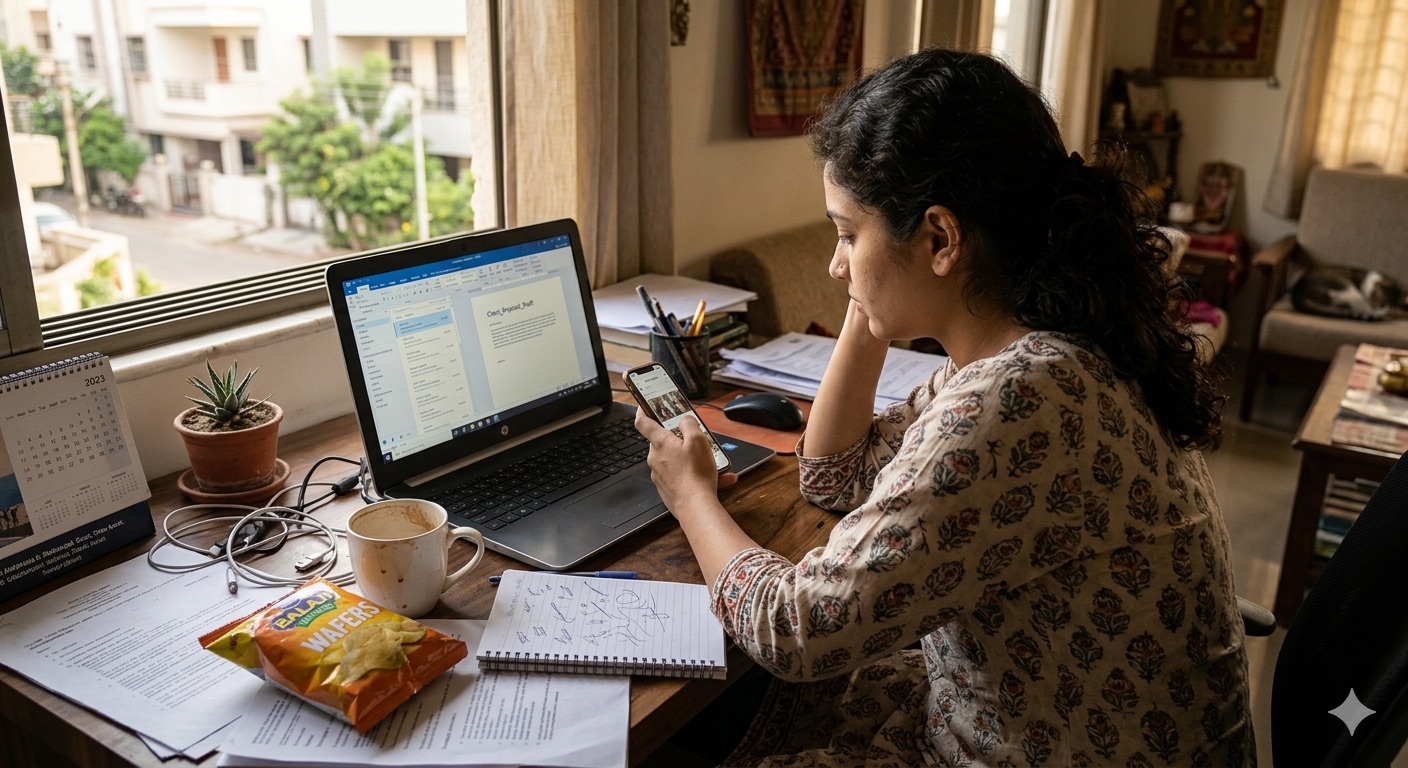
In an office, your environment pushes you to stay engaged. At home, that external pressure disappears.
Now, everything depends on your internal discipline.
Some days, you’ll be highly productive. Other days, even starting feels difficult. This inconsistency can affect both performance and confidence.
The challenge is not working hard, it’s starting consistently.
How to fix it:
Build a routine that reduces decision-making.
Wake up at a fixed time. Get ready as if you’re going to work. Start your day with a clear plan instead of figuring things out as you go.
Small, repeatable habits are more powerful than occasional bursts of motivation.
6. Physical Health Quietly Declines

Remote work reduces movement without you noticing it.
There’s no commute, no walking between meetings, no natural breaks. Hours pass in the same position, often in setups that are not designed for long-term use.
Over time, this leads to back pain, stiffness, eye strain, and reduced energy levels.
The impact is gradual, which is why it’s easy to ignore.
How to fix it:
You don’t need a perfect setup, but you need a functional one.
Use a chair that supports your posture. Keep your screen at eye level. Take short breaks every hour, even standing or stretching helps.
Add some form of daily movement. It doesn’t have to be intense, consistency matters more than intensity.
7. Burnout Builds Without Warning
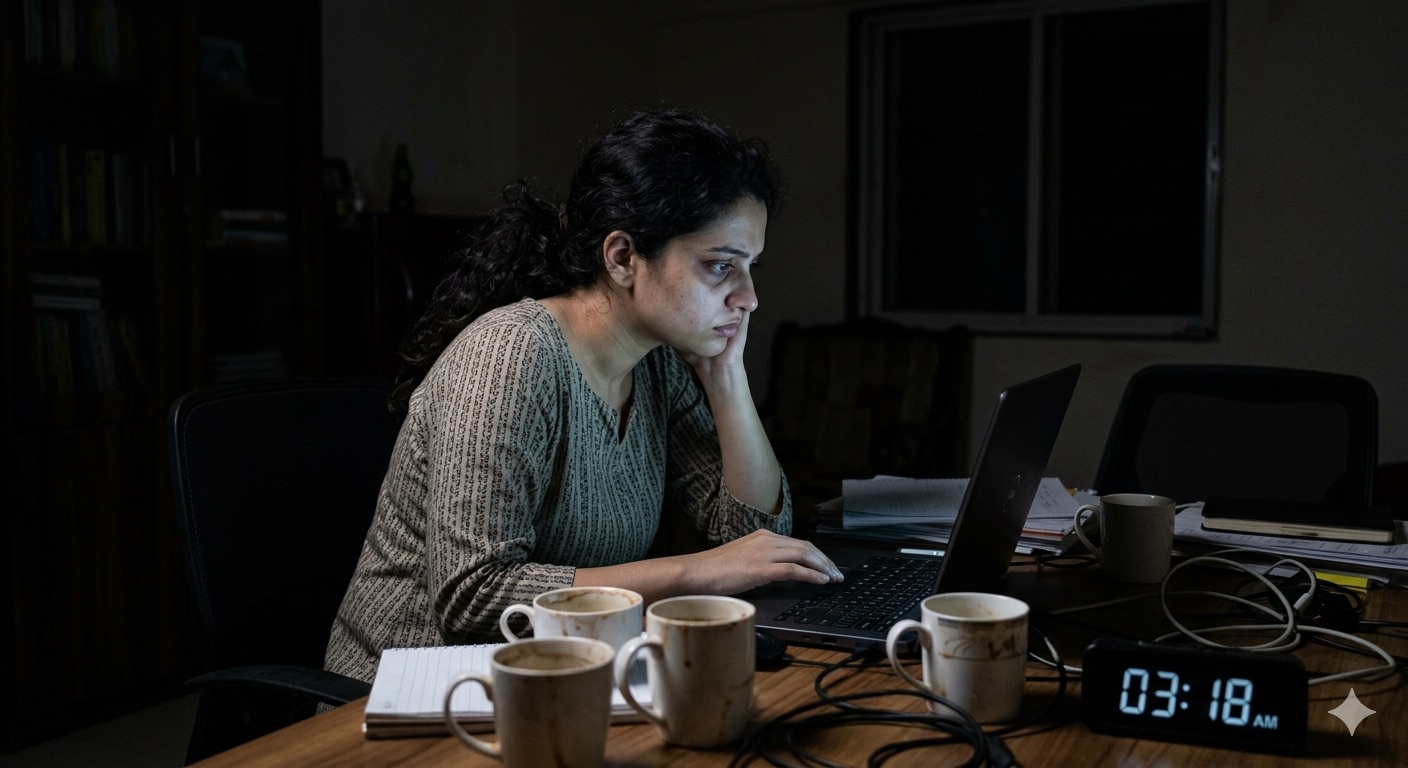
One of the most dangerous aspects of remote work is invisible burnout.
You’re working from home, so it doesn’t feel like overwork. But the hours add up. The mental load increases. And because there’s no clear boundary, you don’t fully disconnect.
You keep going, until your energy drops, focus disappears, and everything starts feeling harder than it should.
How to fix it:
Start by tracking your actual working hours. Most people underestimate how much they work remotely.
Pay attention to early signs, constant tiredness, lack of interest, slower thinking. These are signals, not weaknesses.
Take breaks seriously. Protect your energy the same way you protect your time.
8. Career Growth Requires More Effort

In a remote setup, your work is less visible.
People don’t see how you solve problems, how you think, or how much effort you put in. As a result, recognition doesn’t happen automatically.
This doesn’t mean growth is limited, it just means it’s less passive.
How to fix it:
Visibility needs to be intentional.
Share updates on your work. Participate actively in discussions. Communicate your progress clearly.
Think of it this way: if your work is not visible, it doesn’t exist in a remote environment.
9. Technical Issues Break Your Flow
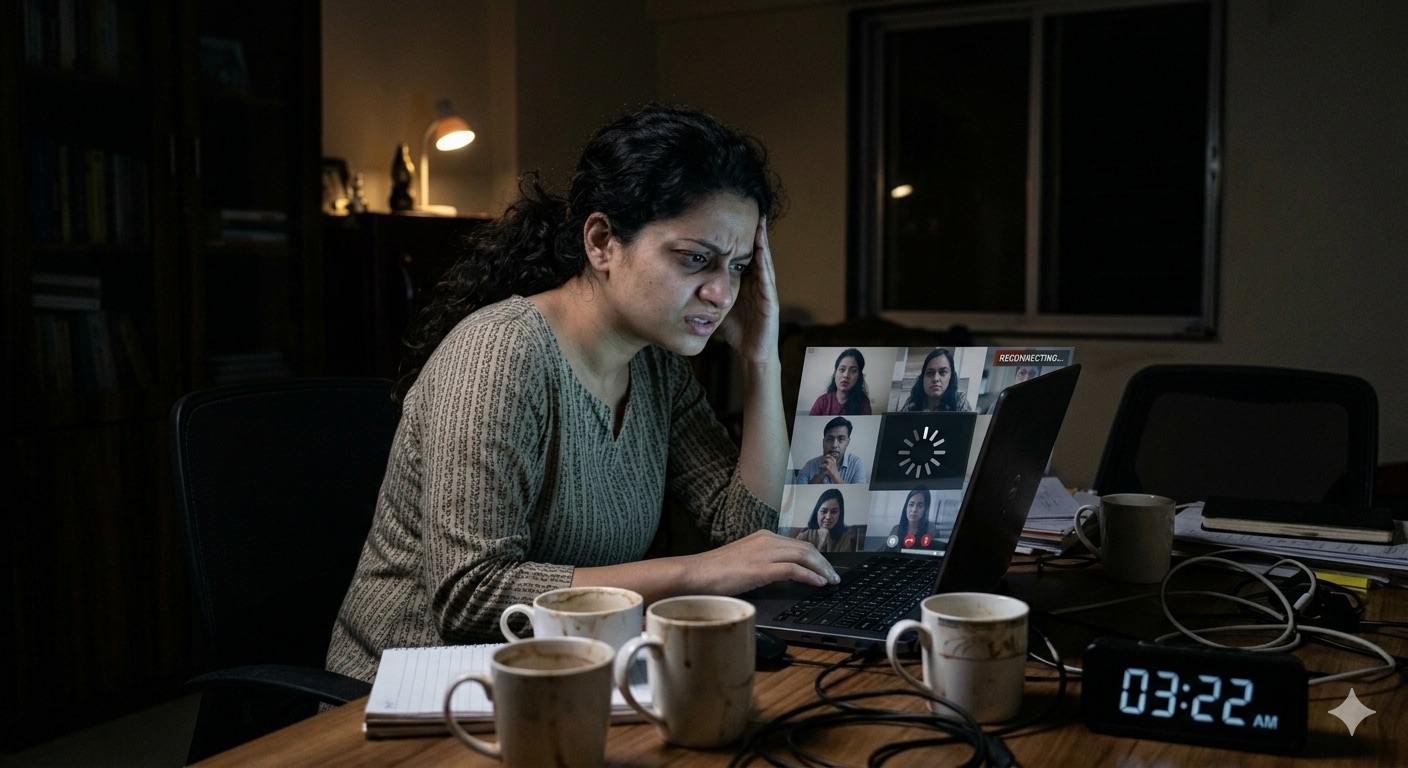
Remote work depends entirely on your setup.
A slow internet connection, a failed call, or a tool glitch can interrupt your work at the worst possible moment. Even small issues create frustration and break momentum.
The bigger problem is not the issue itself, it’s the interruption it causes.
How to fix it:
Treat your setup as part of your productivity system.
Invest in a stable internet connection. Keep a backup option ready, like a mobile hotspot. Use tools that are reliable and familiar.
Reducing friction in your setup improves your overall workflow.
10. Your Home Stops Feeling Like a Place to Relax

When work and life happen in the same space, your brain starts associating your home with responsibility instead of relaxation.
You might finish work, but mentally, you’re still in that space.
This makes it harder to switch off, even when you’re not working.
How to fix it:
Create separation, even if it’s minimal.
Use a specific area only for work. Once your day ends, leave that space physically. Change your environment, even a small shift helps your brain reset.
You don’t need more space. You need clearer boundaries.
Remote Work Isn’t Easier, It’s Just Different
There’s a common assumption that working from home is easier than working in an office.
It’s not.
It simply shifts the responsibility.
Instead of structure being provided externally, you have to create it yourself. Instead of supervision, you rely on discipline.
That’s the real trade-off.
Conclusion
Working from home is powerful, but only when managed intentionally.
The goal isn’t to eliminate every problem. That’s unrealistic. The goal is to recognize these challenges early and build systems that prevent them from affecting your performance and well-being.
In 2026, the most successful remote professionals are not the ones with the best setups or the most flexible schedules.
They are the ones who understand how to manage focus, energy, and boundaries in an environment that offers freedom, but demands responsibility.
If you approach remote work casually, it will slowly reduce your productivity.
If you approach it with structure, awareness, and discipline, it can become one of the most effective ways to work.
Remote work is not easier, it’s simply less supervised.
And that makes discipline the most valuable skill in the modern workforce.”
Frequently Asked Questions
Working from home can be productive if managed properly. However, distractions, lack of structure, and poor communication can reduce efficiency. Creating a routine and a dedicated workspace significantly improves productivity.
The biggest problem is the lack of clear boundaries between work and personal life. This often leads to overworking, burnout, and reduced mental well-being over time.
You can stay focused by using time-blocking techniques, minimizing distractions, and maintaining a consistent daily routine. A dedicated workspace also helps improve concentration.
Yes, remote work can impact mental health due to isolation, lack of social interaction, and blurred work-life boundaries. Staying socially connected and maintaining a routine can help reduce these effects.
Yes, remote and hybrid work models are expected to continue growing. However, success in remote work depends on how well individuals manage productivity, communication, and work-life balance.